
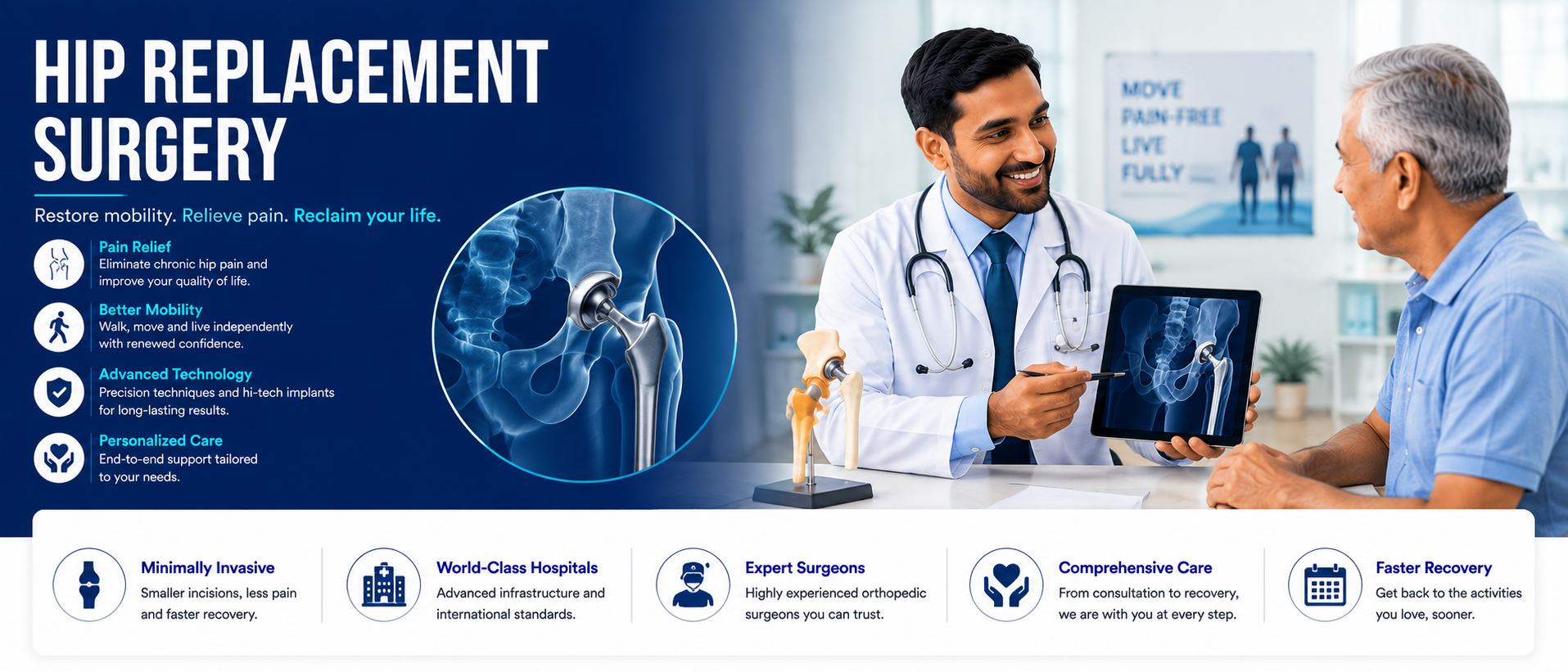
Hip Replacement Surgery in India - Affordable, World-Class Care for Hip Pain Relief
Hip replacement surgery in India has become the gold standard choice for international patients seeking a permanent, effective solution to severe hip pain caused by osteoarthritis, rheumatoid arthritis, avascular necrosis, hip fractures, and other debilitating hip conditions. At Orthotourism, we connect patients from around the world with India’s finest hip replacement surgeons, delivering world-class surgical care, advanced implant technology, and comprehensive rehabilitation support at costs 60-75% lower than in Western countries.
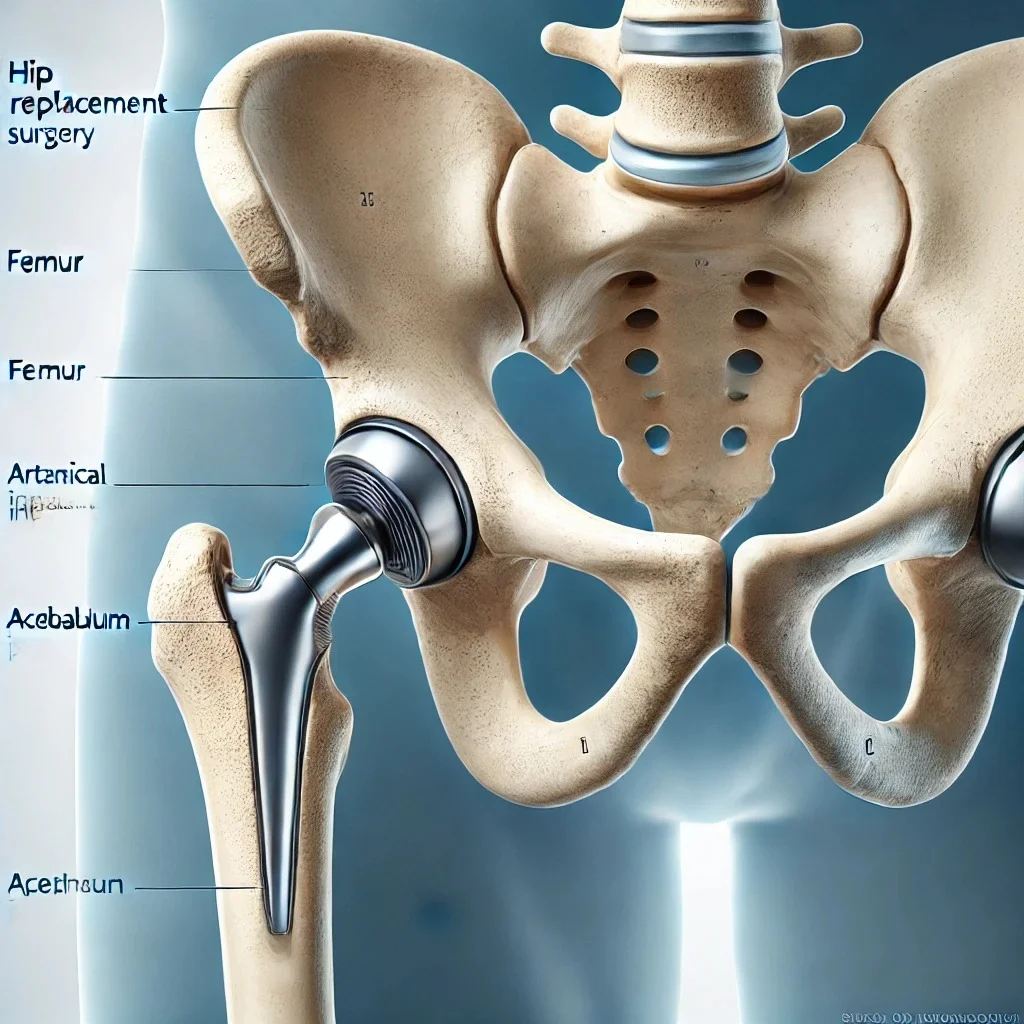
Total hip replacement surgery, also known as total hip arthroplasty, involves replacing the damaged ball and socket of the hip joint with precision-engineered metal, ceramic, or polyethylene implants designed to replicate the smooth, pain-free movement of a healthy hip. India’s leading hip replacement surgeons are highly experienced in both conventional and robotic-assisted hip replacement techniques, using implant systems from globally recognized manufacturers to ensure the best possible long-term outcomes and longevity for patients.
Total hip replacement cost in India is dramatically lower than in the United States, United Kingdom, or Australia — making high-quality hip surgery accessible to patients who cannot afford or face long waiting lists for the procedure in their home country. Our all-inclusive packages cover surgery, implants, hospital stay, physiotherapy, airport transfers, and accommodation support, ensuring a seamless, stress-free treatment journey from start to finish.
Recovery from hip replacement surgery begins almost immediately, with most patients able to stand and take assisted steps within 24 hours of surgery. Our partner hospitals provide comprehensive post-operative physiotherapy and rehabilitation programs that guide patients from their first steps after surgery through to full functional recovery, which most patients achieve within three to six months.
Contact Orthotourism today for a free hip replacement consultation and let our expert team help you access affordable, world-class hip surgery in India — and reclaim your mobility, independence, and quality of life.

Symptoms Indicating Hip Replacement
- Persistent hip pain during activity or at rest, often felt in the groin, thigh, or buttocks.
- Difficulty walking, climbing stairs, or rising from a seated position.
- Stiffness or reduced range of motion, making it hard to bend or rotate the hip.
- Swelling or inflammation around the hip joint that doesn't respond to treatment.
- A grating, grinding, or clicking sensation during movement.
- Limping or uneven gait due to hip discomfort or weakness.
Preparation for Surgery:
- Medical Tests: Blood tests, imaging (X-rays, MRIs), and cardiac evaluations to assess overall health.
- Prehabilitation: Strengthening exercises targeting the hip, thigh, and core muscles to improve recovery outcomes.
- Lifestyle Adjustments: Quitting smoking, reducing alcohol intake, and maintaining a healthy weight.
- Medication Adjustments: Stopping certain medications (e.g., blood thinners, anti-inflammatories) under medical guidance.
- Home Setup: Preparing a recovery-friendly space with a walker, raised toilet seat, grab bars, and a shower chair.
- Education: Discussing the procedure, potential risks, movement precautions, and expected recovery plan with the surgeon.
Risk Factors
Risk Factors Leading to the Condition:
- Osteoarthritis or rheumatoid arthritis causing joint deterioration.
- Previous hip injuries, fractures, or trauma.
- Avascular necrosis (loss of blood supply to the hip bone).
- Genetic predisposition to joint problems or hip dysplasia.
- Aging and obesity, which increase stress and wear on the hip joint.
Risks Involved with Hip Replacement Surgery
- Infection: Around the surgical site or deep around the implant.
- Blood Clots: Risk of clots in the legs or lungs (deep vein thrombosis or pulmonary embolism).
- Implant Issues: Loosening, wear, or failure of the implant over time.
- Hip Dislocation: The new joint can dislocate, especially in the early recovery period.
- Leg Length Discrepancy: One leg may feel slightly longer or shorter after surgery.
- Nerve or Blood Vessel Injury: Rare but can lead to numbness, weakness, or altered sensation.
- Pain or Swelling: Persistent issues in rare cases.
- Allergic Reactions: To metal or plastic components in the prosthetic joint.
Procedure
- Anesthesia: General or spinal anesthesia.
- Incision: A precise cut over the hip to access the joint.
- Removal of Damaged Joint: Diseased bone and cartilage are removed.
- Insertion of Prosthetics: Implantation of artificial components (metal, ceramic, or plastic).
- Closure: Stitching the incision and applying sterile dressing.
- Duration: Typically takes 1-2 hours.
Post-procedure Care
- Hospital Stay: Usually 3-5 days.
- Pain Management: Medications to control pain and prevent blood clots.
- Physical Therapy: Starts immediately to regain strength and mobility.
- Follow-ups: Regular check-ups to monitor recovery and implant functionality.
- Long-term Care: Avoiding high-impact activities, maintaining a healthy weight, and regular exercise.
Success Rate
- Hip replacement surgeries have a success rate of 90-95%.
- Implants last 15-20 years, with improved longevity in recent designs.
- Patients experience significant pain relief and better mobility post-surgery.

Quick Links
Treatments
- Hip Replacement Surgery
- Knee Replacement Surgery
- Shoulder Replacement Surgery
- Hip Resurfacing Surgery
- Elbow Replacement Surgery
- ACL Reconstruction Surgery
- Spinal Surgeries
- Carpal Tunnel Surgery
- Knee Arthroscopy
- Shoulder Arthroscopy
- Ankle Ligaments Reconstruction or Repair
- Joint Fusion Surgery
- Rotator Cuff Repair Surgery
Get in Touch
- Door No 614-R5, Iriavan Nagar, Mathur Post Kumaramangalm, Pudukkottai - 622515.
-
+91 63834 06062
+91 80567 54755 - care@orthotourism.com
Copyright ©️ 2026 Orthotourism. All Rights Reserved.